Invite Only Online Seminar | Feb 5, 2025 | 10:00 AM EST / 4:00 PM CEST

Optimize Your Photonic Design with the Right Tool

Meet the Speakers

shanhui-1

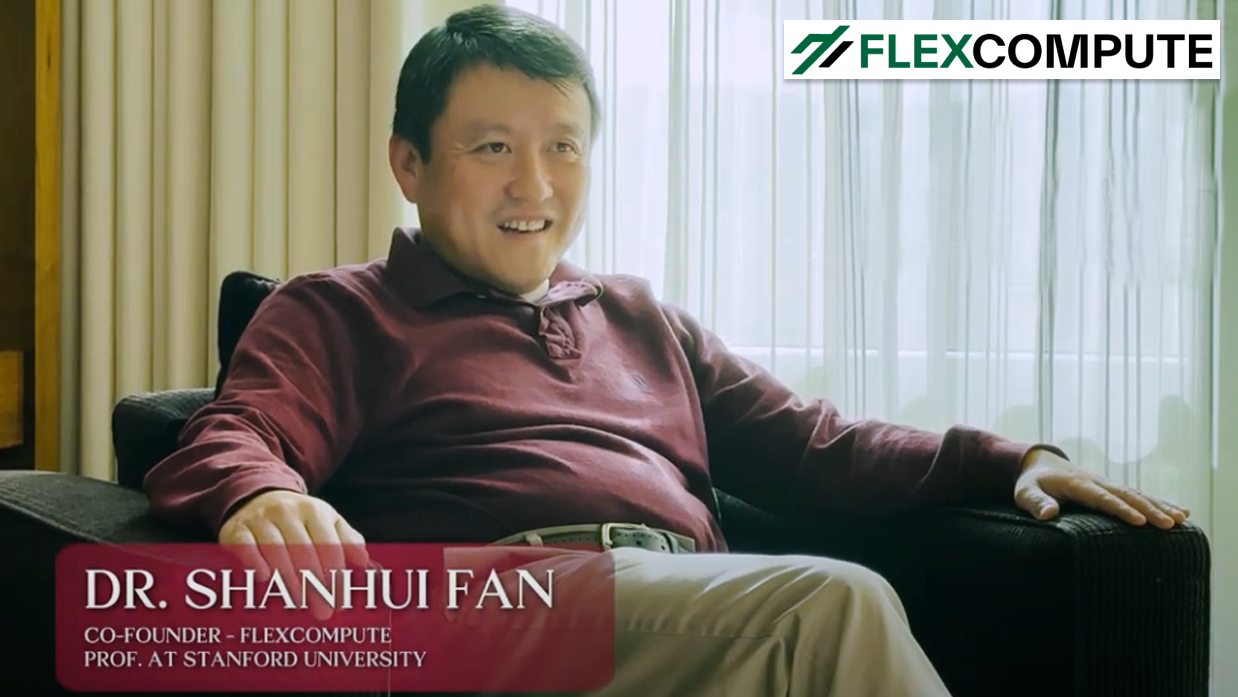
Dr. Shanhui Fan

Professor of Electrical Engineering and Applied Physics

Stanford University

tyler-1

Dr. Tyler Hughes

Principal Scientist

Ph.D. Stanford University

prash-1

Dr. Prashanta Kharel

Technology Strategist

Ph.D. Yale University

Introduction

The convergence of gradient descent, GPUs, and Python has revolutionized the field of artificial intelligence, and now, these same technologies are opening new frontiers in photonics. GPUs boost electromagnetic simulation speed by a factor of 100, adjoint-based gradient descent enables efficient exploration of the design space, and Python can automate complex workflows. When combined, they unlock unprecedented potential for accelerating photonic innovation.

This seminar will introduce new developments in Tidy3D, the next-generation photonic optimization tool designed to be the "PyTorch" of the photonics world. We will showcase the magic of automated design by demonstrating how to perform adjoint optimization with just a few lines of code on any Tidy3D simulation. Tidy3D empowers you to push the boundaries of possibility—whether working on ultra-large or long-duration simulations for 2D materials, topological photonics, interconnect circuits, or Lidar chips

What you will learn: 

  • Hardware Acceleration in Computational Photonic Design – Learn why GPU outperforms CPU in solving Maxwell’s equations and the future of simulation hardware.

  • Adjoint-Based Inverse Design – Learn how to perform an adjoint-based inverse design of photonic devices by writing just a few lines of code.

  • Application of Inverse Design – Learn how to use the Inverse Design method in integrated photonics, meta-optics, plasmonics, and more.

Who should attend:

  • Students – Enhance your simulation expertise and build advanced skills to automate processes, accelerating data collection and gaining insights more quickly. 

  • Faculties—Equip your students with the most powerful simulation tools to advance their learning, increasing the impact of your research and more efficiently onboard new students.

  • Photonic Engineers – Stay updated with the latest technology in photonic design. Breakthrough performance limits and achieve your targets more efficiently than ever before.

Multi-physics platform for all your photonic simulations

Fast, Morden Photonic Simulations

Handle large-scale, multi-physics simulations with exceptional performance and accuracy through the browser or Python API.

Education Group License

Including 2000 FlexCredits for up to 10 users in one group — a value of $3000

Coin Icon
2000
Free FlexCredits shared by the group
Clock Icon
20
Free simulations per day
Users Icon
10
Up to ten users in a group
coin
10
Extra FlexCredits for individual user monthly