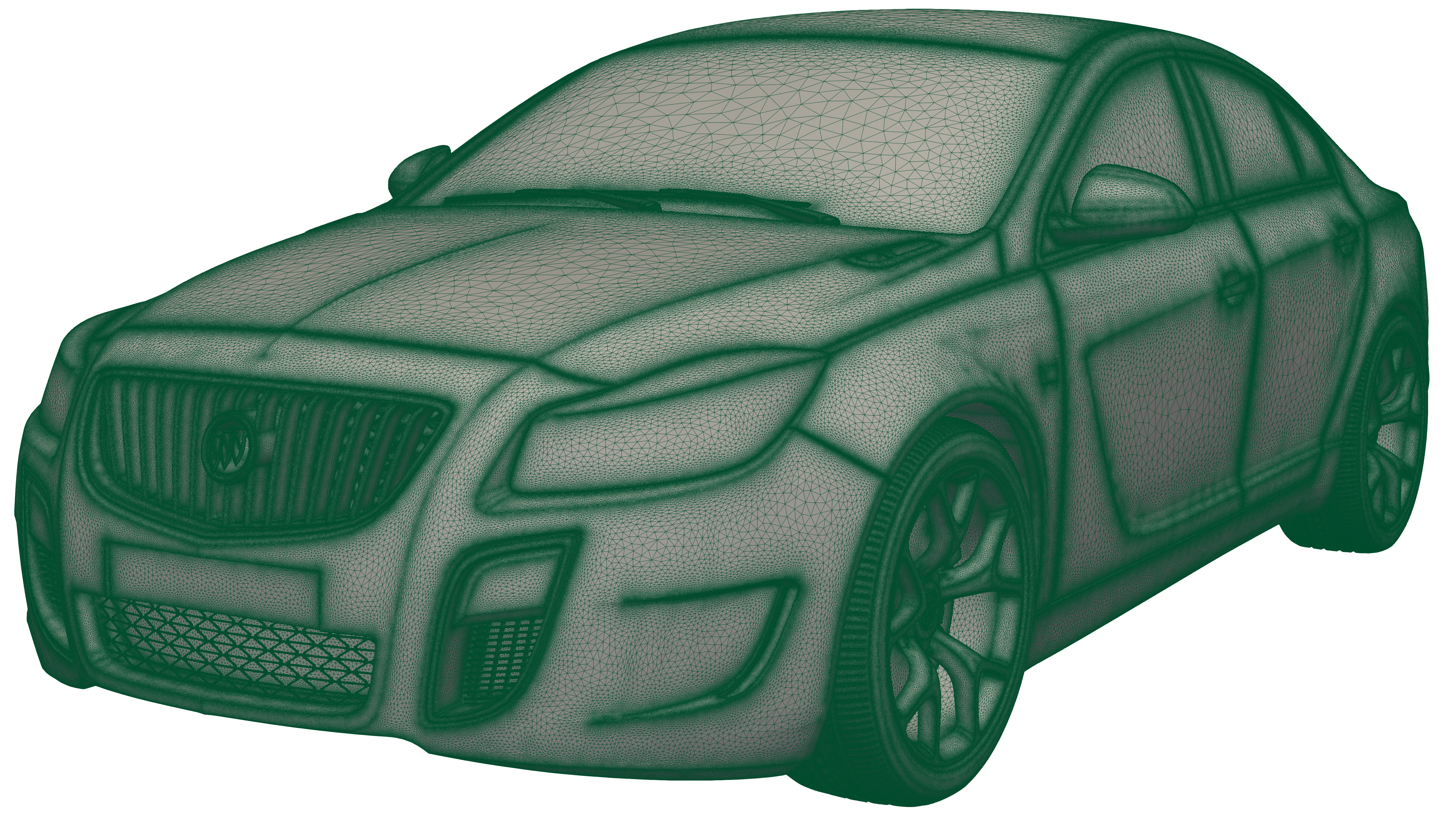
Recently, we announced the official launch of GeometryAI, our AI-powered geometry preprocessing platform. With this platform, we are setting out to eliminate pre-processing from the simulation workflow. Not improve it. Not make it faster. Remove it entirely through intelligent automation.
At its core, GeometryAI is designed to consume imperfect CAD, learn the structure of the object from incomplete or inconsistent surfaces, and reconstruct the geometry into a clean, simulation-ready domain automatically.
To prove this on real-world geometry, we are launching the Preprocessing Challenge.
Challenge Us with Your Geometry
The challenge is simple: Submit your raw, imperfect CAD model and we will run it through GeometryAI and return a high-quality surface mesh, within the same day.
Completely free. No catch.
The challenge will be open until Friday, May 1, 2026.
We are specifically looking for real-world, complex geometries that are normally difficult to prepare. Models with gaps, overlaps, intersecting faces, and other defects that traditionally require manual cleanup or struggle with surface wrapping methods.
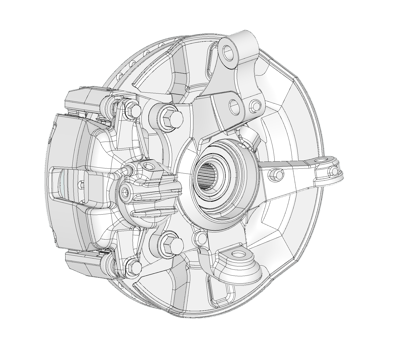
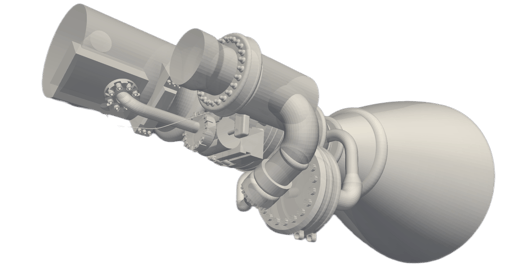
If your geometry is something you would normally spend hours fixing, it is exactly what we want to see.
How GeometryAI Works
If you are unfamiliar with GeometryAI, or are wondering how it can handle imperfect CAD and still deliver a high-quality mesh so quickly, the answer lies in how the system approaches this.
GeometryAI automates the full preprocessing pipeline. It replaces what is typically hours or days of manual work with a system that interprets, reconstructs, and prepares geometry directly.
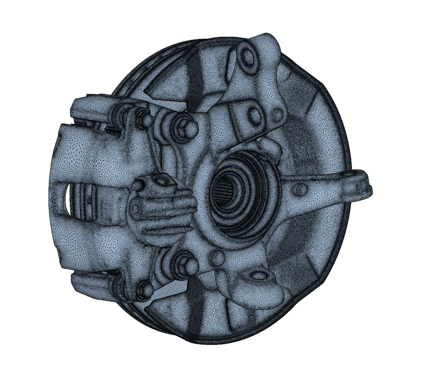
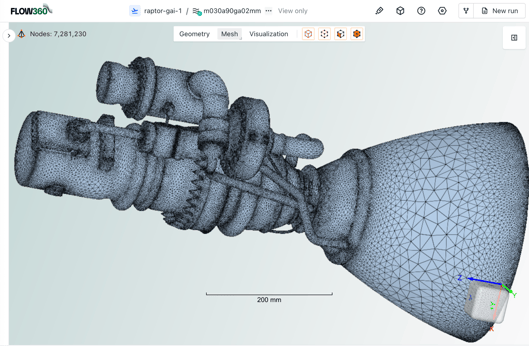
It uses proprietary neural reconstruction algorithms to consume imperfect CAD, infer the intended topology, and generate a valid simulation domain.
-
Fault-Tolerant — Interprets raw, dirty geometry, including gaps, overlaps, and disconnected surfaces
-
3D Intelligent — Reconstructs the object in 3D, recovering the true shape from fragmented or inconsistent surface data
-
Spatially Aware — Reasons about spatial relationships in imperfect CAD to form a valid simulation domain, even when parts are misaligned or incomplete
How to Participate
All you need to participate is a CAD model.
After submitting the form below, our team will follow up with instructions for securely uploading your non-proprietary geometry. If you have a proprietary model and would still like to see GeometryAI in action, let us know in the form and we can work with you to demonstrate the technology.
The challenge is open to all BRep CAD and discrete mesh formats, including STEP, IGES, SolidWorks, CATIA, STL, Ugrid and others. It is not limited to a specific industry or use case.
While GeometryAI is designed to accelerate CFD workflows, the resulting geometry and mesh are physics-agnostic and can be used across a wide range of CAE tools.
What We Will Deliver
Once your model is received, it will be automatically processed through GeometryAI and we will provide you with:
-
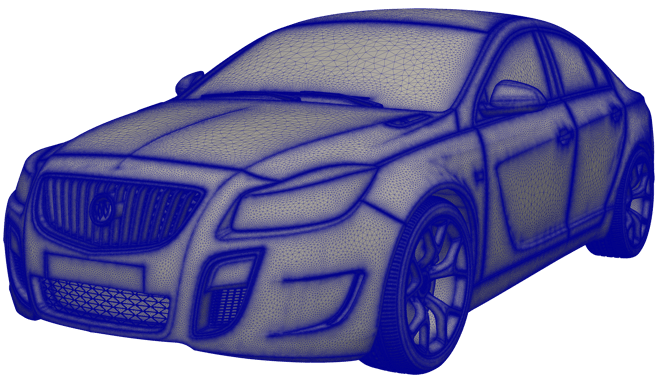
A high-quality surface mesh generated directly from your BRep CAD or discrete mesh
-
A one-page preprocessing report including:
-
Total automated processing time
-
Final surface mesh size
-
Key surface mesh quality metrics
-
What We Aim to Prove
This challenge is designed to demonstrate that geometry preprocessing does not need to be a manual, time-intensive step.
By running your own model through GeometryAI, you can evaluate how complex, imperfect CAD can be automatically converted into a simulation-ready mesh in a fraction of the time traditionally required.
The goal is not to compare workflows. It is to show that preprocessing itself can be absorbed into the system.
Submit Your Model
The challenge is open from now until May 1, 2026. Request to submit your model below.
Challenge us with your most difficult BRep CAD or discrete mesh files and let us prove what automated geometry preparation can do for you.

.gif)